Across Bihar and West Bengal, the Special Intensive Revision (SIR) exercise led to the removal of lakhs of voters from the electoral rolls, igniting widespread uncertainty among those affected about their voting rights in upcoming Assembly elections. Specifically, over 47 lakh names were deleted in Bihar and nearly 91 lakh in West Bengal. This extensive deletion occurred ahead of the Assembly elections scheduled for 2025 and 2026, respectively, raising serious concerns over the democratic participation of these individuals.
Many of those removed from the voter lists expressed deep anxiety and confusion. Their status turned uncertain, as they found themselves unable to participate in the forthcoming elections unless their names were restored. The disenfranchisement spans diverse social backgrounds, impacting disproportionately the poor and marginalized sections who often lack proper documentation to verify their eligibility.
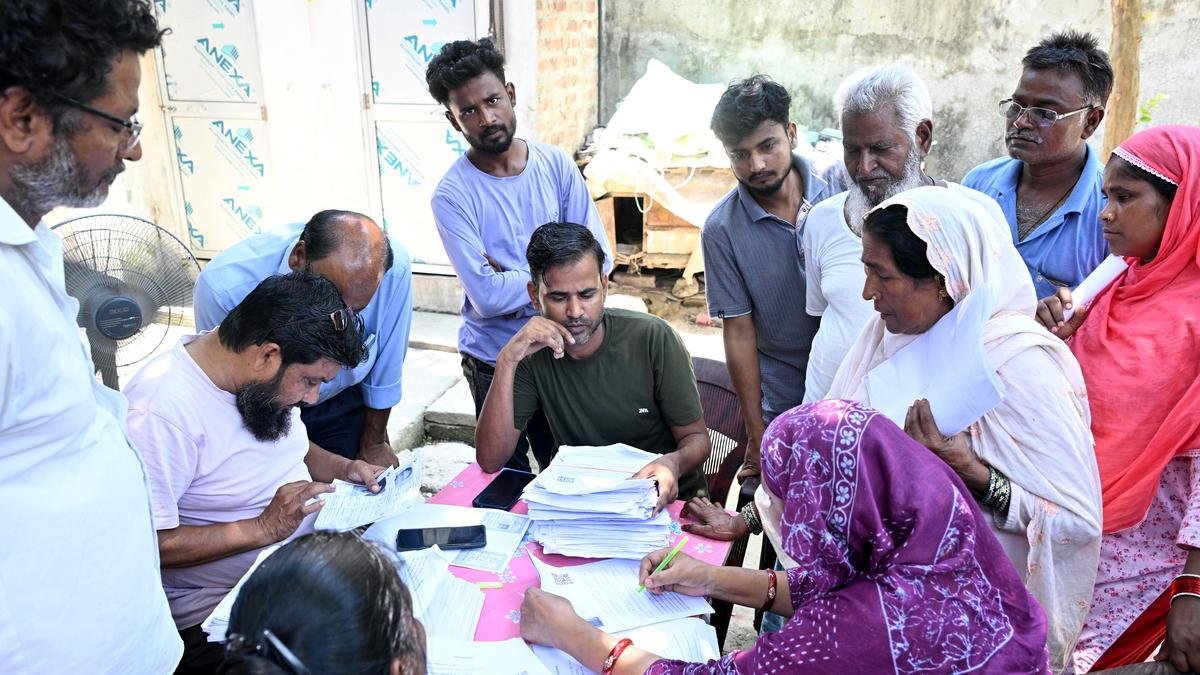
Shrabana Chatterjee and Senjuti Sengupta visited multiple areas within these states to document firsthand accounts of the ordeal. They met with citizens grappling with the consequences of deletion — individuals caught in a labyrinth of paperwork and bureaucratic procedures required to reclaim their rightful place on the electoral rolls.
The process to reinstate voters involves repeated attempts to provide proof of identity, citizenship, and residency. Many affected individuals must navigate through multiple government offices, often facing delays, unresponsive officials, and conflicting information. This administrative quagmire amplifies their frustration and the risk of permanent disenfranchisement.
In many cases, voters discovered their names were deleted without prior notice or clear explanation. Some suspect inaccuracies in the data-matching and verification methods used during the SIR exercise. Others feel victimized by flawed mechanisms that fail to accommodate informal living arrangements and lack of formal address documentation, common in rural and economically disadvantaged communities.
The repercussions extend beyond individual voter disenfranchisement. The large-scale deletions could skew election outcomes and undermine the representativeness of the democratic process. Civic rights advocates warn that if corrective action is not swiftly taken, millions may be unjustly excluded from exercising their fundamental electoral rights.
Efforts to address these deletions include public awareness campaigns, legal interventions, and demands for more transparent and accessible procedures for rectification. Election authorities have been urged to simplify the process to restore names and ensure multiple channels for grievance redressal are operational.
As the election dates approach, the affected voters’ urgent plea is clear: to be heard, acknowledged, and reinstated so they can participate meaningfully in shaping their governments. Their struggles underscore the critical importance of accurate and inclusive electoral roll management in safeguarding democracy.