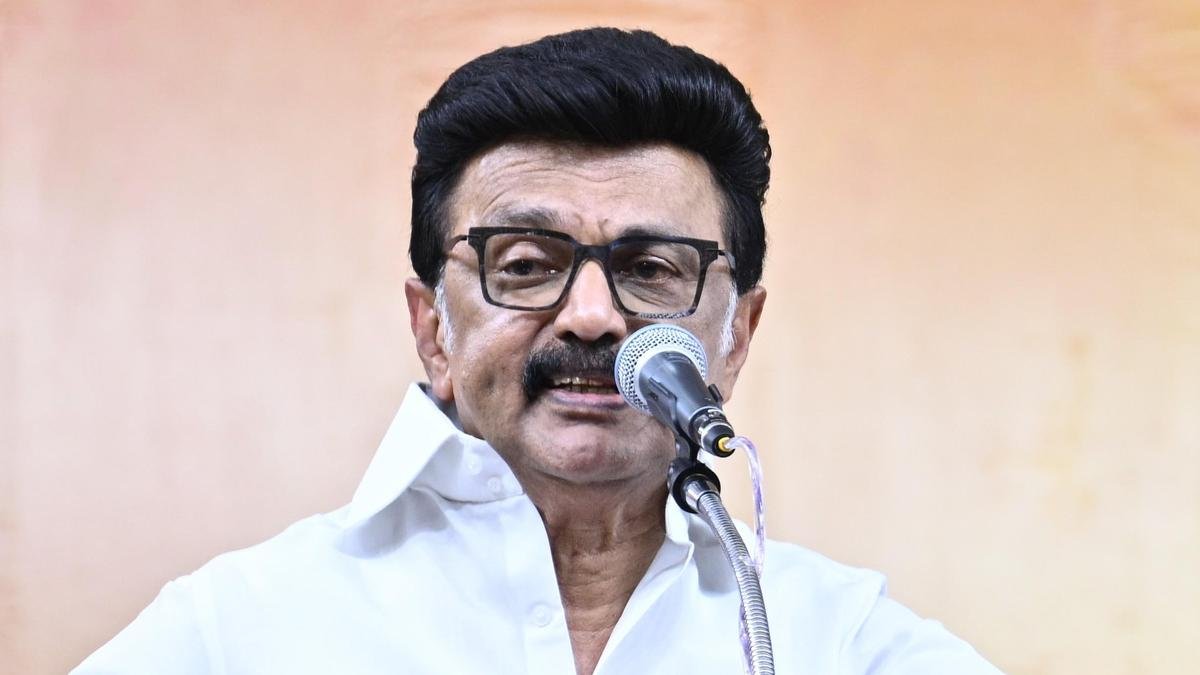
The recent political controversy in Tamil Nadu has intensified as DMK president M.K. Stalin openly criticised Dharapuram bypoll candidate Sathyabama for her party switch from AIADMK to TVK. Stalin’s comments, which appeared to mock her political journey metaphorically referring to her “somersaults with her body,” sparked outrage among TVK ministers and supporters who accused him of body-shaming.
Sathyabama, initially an AIADMK loyalist, joined TVK ahead of the Dharapuram bypoll, a move that was seen as a significant shift in the local political landscape. While political party switches are not uncommon in Indian politics, the manner in which Stalin addressed the situation drew attention to the sensitivity required when discussing personal attributes, even metaphorically.
TVK ministers swiftly responded to Stalin’s remarks, condemning his statement as inappropriate and disrespectful towards a female candidate. They insisted that political discourse should remain focused on ideologies and policies rather than personal jabs that perpetuate gender stereotypes or body-related comments.
Political analysts note that such verbal exchanges are part of the increasingly heated environment surrounding bypolls, where stakes are high and parties aggressively contest to gain or retain influence. However, the backlash against Stalin highlights a growing awareness and rejection of language that can be construed as body-shaming, especially towards women in politics.
The Dharapuram bypoll is significant for several reasons, including its impact on the regional balance of power between DMK, AIADMK, and TVK. Sathyabama’s candidature symbolises a broader trend of political realignments and the challenges faced by candidates navigating shifting alliances. Her move to TVK was seen as both strategic and contentious.
In response to the controversy, many voices from civil society and political circles have called for respectful dialogue and focus on the candidate’s capabilities, policy stances, and vision for Dharapuram rather than personal remarks. The incident has sparked wider conversations about gender sensitivity and respectful conduct in Indian politics.
As the bypoll date approaches, attention is likely to remain on how parties handle public discourse and whether lessons are learned from this episode. The TVK ministers’ strong rebuttal to Stalin’s comments underscores the evolving political culture, where respect and dignity are increasingly demanded by both politicians and the electorate.
Overall, the episode serves as a reminder of the complex interplay between political strategy, media narratives, and the importance of maintaining civility, particularly when gender-related sensitivities are involved. It remains to be seen how this controversy will affect the campaign dynamics and voter sentiments in Dharapuram and wider Tamil Nadu politics.