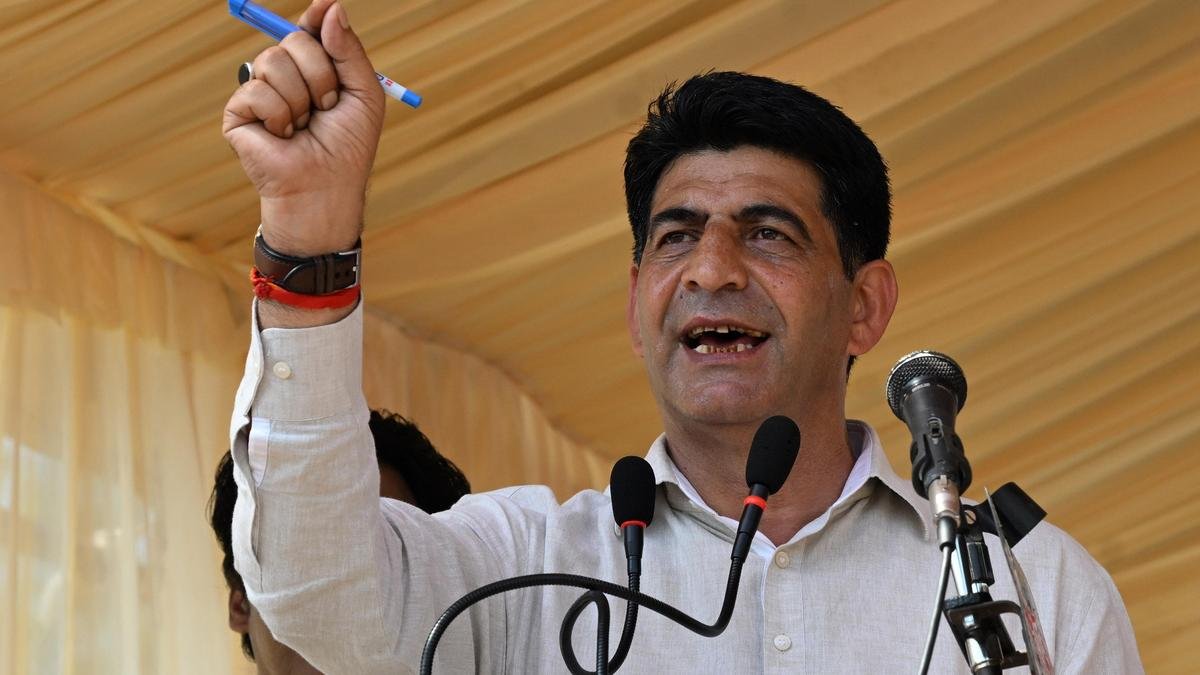
The political climate in Jammu and Kashmir has recently witnessed a contentious incident involving a National Conference (NC) legislator, Mr. Kaloo. The event has sparked debate and controversy, as conflicting accusations have emerged between the legislator and the police force.
Initially, the NC legislator alleged that he was physically attacked by his own bodyguard. According to Mr. Kaloo, the bodyguard assaulted him, raising questions regarding the security and management of protection details for public officials in the region. This claim came as a surprise since such scenarios are rare, and the trust between a bodyguard and the individual they are assigned to protect is generally considered sacrosanct.
However, the Jammu and Kashmir Police have contested this version of events, turning the tables by accusing Mr. Kaloo and another leader affiliated with the NC of assault. More specifically, the police allege that the legislator and his colleague initiated an attack against the police personnel present. This serious counterclaim was significant enough for law enforcement to initiate formal legal action.
Following the police’s statement, an FIR — First Information Report — was reportedly filed against Mr. Kaloo, marking the official commencement of a criminal investigation concerning the alleged assault. The filing of an FIR is a critical step in the Indian legal system, setting the stage for further inquiry and potential prosecution.
This conflicting set of accusations encapsulates the complexities inherent in the political and social dynamics of Jammu and Kashmir. On one hand, the legislator’s claim highlights potential internal discord and security lapses within political circles. On the other hand, the police’s accusation and legal response underscore tensions between law enforcement and political leaders, which can sometimes escalate to public confrontations and legal battles.
Observers and political analysts have pointed out that the incident could have wider implications, potentially affecting the public perception of both the NC party and the police force. It may also influence ongoing political negotiations and alignments within the state, given the delicate balance of power and the region’s historically fraught political environment.
As of now, detailed information about the exact circumstances surrounding the altercation remains limited. Both sides have remained firm in their accusations, and no definitive resolution has been publicly announced. The investigation initiated by the FIR will likely explore testimonies, physical evidence, and other investigative leads to establish the sequence of events and identify responsible parties.
In conclusion, the dispute between the NC legislator’s allegations of being attacked by his bodyguard and the police’s allegations of assault by the legislator himself reflects deeper issues within political and law enforcement interactions in Jammu and Kashmir. The outcome of the ongoing investigation will not only determine legal accountability but may also shape the political landscape in the region in the coming months.